[ Behind the Scenes ]
Rethinking how viewers find what they love through conversational intelligence

Quickplay X Google Cloud
ROLE
Lead Product Designer
TIMELINE
August - September 2023
TEAM
SKILLS
4 Designers
Product Strategy & Design
Prototyping
Motion Design
OVERVIEW
Quickplay Media is the industry leader in delivering next generation OTT solutions. It’s latest collaboration with Google Cloud, as partners aimed to harness the power of generative AI to create new opportunities for user engagement, discovery and monetization for the media and entertainment industry.
I led a team of 4 to design a conversational, context-aware AI layer to reimagine discovery to be showcased at IBC 2023 (International Broadcasting Convention) in Amsterdam.
This exploration helped define a forward roadmap for Quickplay’s next-gen AI experience.

PROBLEMS
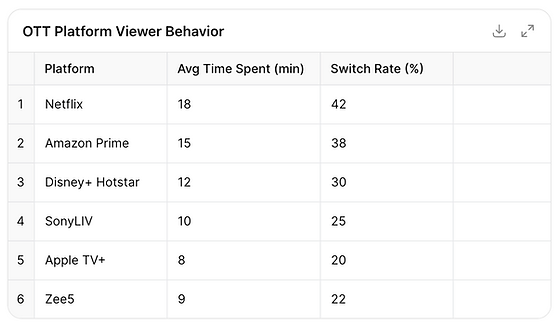
Viewers struggle to discover the content they feel like watching
An average of 12–18 minutes is spent in just deciding what to watch nearly as long as a short episode. Up to 40% abandon or switch shows within the first 10 minutes.
Decision Paralysis
The vastness of OTT catalogs overwhelms rather than empowers and results in the users scrolling endlessly
Fragmented Context
Discovery is built around content not context. Platforms rarely consider the user’s mood, time, or intent like “I want something light before bed”
“Black box” suggestions
Most users don’t trust or understand why something is being recommended
Group Viewing Dynamics
When watching with others, preferences clash — couples or families often abandon the process entirely because there’s no mechanism to collaboratively narrow choices.
DISCOVERY
Understanding today’s OTT discovery experience

We conducted an in-depth exploration of the OTT landscape, examining how recommendation systems function across regions, emerging discovery trends, and shifting user expectations. To ground our understanding, we mapped our own frustrations across multiple platforms, analyzed user discussions on Reddit to surface authentic pain points, and interviewed 12 viewers to understand how they choose what to watch.


OPPORTUNITY
Move discovery from algorithm push to conversational pull
Intention-based suggestions
Instead of passively pushing titles based on historical data, the system engages users in a dialogue to understand why they want to watch something. It learns intent, mood, and context, shaping discovery around the user’s current state rather than their past behavior.
NLP models can classify intent based on tone cues rather than genre labels. For example Instead of matching keywords like “funny” or “comedy”, the system parses tone and modifiers.
-
“Something funny but smart” → satire or dark humor
-
“Something light to relax” → situational or feel-good comedies
-
“Something chaotic and stupid funny” → slapstick or sketch-based content
-
“Something nostalgic and comforting” → rewatchable favorites or familiar sitcoms.
Beyond understanding one-time intent, the system adapts dynamically to learn from subtle cues such as skips, replays, or completion rates.
CONCEPT EXPLORATION
Guiding Design principle


Set the Scene
Recommendations often miss situational nuance. Through natural speech, context-aware voice discovery allows real-time context reshaping.
AI detects:
horror (genre intent) + with my kid (context constraint)

Thematic Pathways
Typical genres flatten emotional depth. For instance “comedy” can mean sharp satire for one person and goofy action for another.
Users explore “witty satire,” “offbeat adventures,” or “comfort humor,” shaped dynamically by their watch history and collective viewer reactions.

Smart Schedule Sync
The AI syncs with the user’s calendar to understand available viewing windows. Based on this, it recommends content that fits the moment: from quick watch sessions to finishing an in-progress show, boosting consistency and reducing content drop-offs.

Community Curations
Crowd-sourced micro-curations — viewer-made lists built around moods, events, or trends. AI curates and ranks these community lists while surfacing top-rated moods and themes.
Users follow curators or moods they connect with or create custom watchlists to share

Reason Tags in Cards
Most OTT platforms tell you what to watch, reason tags tell you why. Each recommendation comes with a short, AI-generated tag that explains the match based on tone, theme, and context.
For Example: “Since you’ve been watching light thrillers at night, this one balances suspense with calm pacing.”
or “Viewers who enjoyed sarcastic dialogue and strong female leads rated this 4.8⭐.”

From Debates to Discovery
This feature uses a playful, voice-enabled quiz to help couples find common ground in what to watch. By combining both users’ watch histories, genre preferences, and quiz responses, the AI identifies overlapping themes and tonal preferences to suggest shows that satisfy both.
FEEDBACK
The biggest learning was that voice needs a visible body language.

Silence became one of the most critical yet overlooked elements. Users interpreted unmarked pauses as lag or error.
Users trusted the AI more when it reacted immediately, even before answering — small acknowledgments like “Got it” or a visual flicker reassured them that input was received.
CONSIDERATIONS

Designing for Silence
AI thinking needs to be seen, not just heard — subtle animations, micro-movements, or ambient light shifts can visually express cognitive states like “thinking” or “searching”, making waiting feel intentional rather than awkward.

MEASURABLE IMPACT


